IPhone 17 Air: Pursuing beauty at the expense of experience, three obvious drawbacks!
2025年10月9日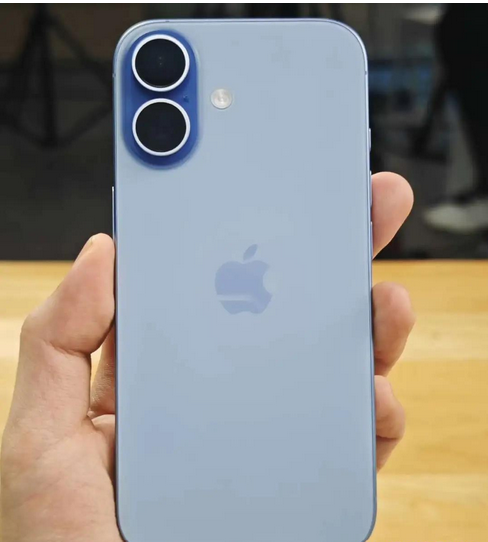
On September 19, 2025, the iPhone 17 series, which has undergone the biggest changes in recent years, was officially released. Lei Technology also bought the two most representative phones, iPhone 17 and iPhone 17 Pro Max, as soon as the new iPhone was released.
Despite having made good psychological expectations, looking at the all-new iPhone 17, there are still some mixed feelings in my heart – on the iPhone 17, Apple has released many functions that were only available in the Pro series in one go, such as Pro Motion
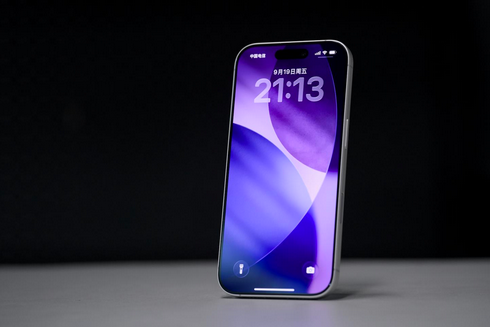
It can be said that in addition to camera functions, the iPhone 17 has comprehensive improvements compared to the iPhone 16 Pro, with the digital version surpassing the previous generation Pro model for the first time.
If you are planning to buy a new iPhone at this point in time, should you buy a brand new and more affordable iPhone 17? Should we choose the iPhone 16 Pro with a stronger camera and better texture? After reading the following comparative review, I believe you will have your own judgment.
Narrower borders and higher brightness, high refresh rate experience finally keeps up with the mainstream
Compared to the previous generation iPhone 16, the iPhone 17 has significantly reduced the thickness of the screen borders, narrowing the body width by 0.1mm while expanding the screen size to 6.3 inches. At this point, the iPhone 17 has completely caught up with the iPhone 16 Pro in terms of screen: both are equipped with 6.3-inch OLED screens, support Pro Motion 120Hz dynamic refresh rate display, and have completely consistent resolution and contrast.
In terms of brightness, the iPhone 17 even surpasses the previous generation iPhone 16 Pro – both have a typical brightness of 1000nit and an HDR brightness of 1600nit. But the outdoor brightness of iPhone 17 is as high as 3000nit, far exceeding the 2000nit of iPhone 16 Pro.
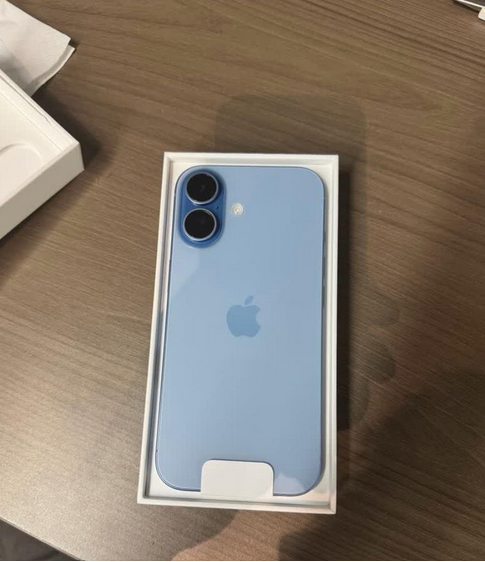
Higher outdoor brightness means that the iPhone 17 has higher readability for outdoor activities, and the screen is also more “transparent” in strong light environments. But higher outdoor brightness usually leads to higher body temperature, and iPhone old users should have experienced a sharp decrease in brightness after using their phones outdoors for a few minutes.
Although there is almost no difference between the front of the iPhone 17 and iPhone 16 Pro, there is still some gap in terms of body feel and weight: the titanium frame of the iPhone 16 Pro has better surface gloss and feel, while the aluminum frame of the iPhone 17 looks just like the previous generation digital iPhone.
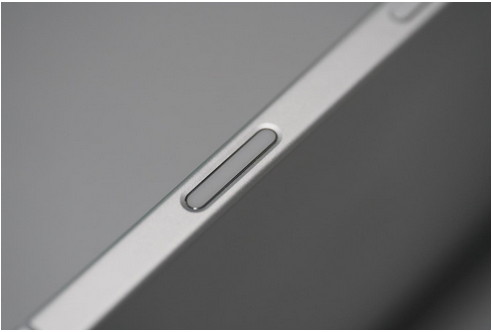
The adjustments in materials, body structure, and battery capacity have also led to changes in the thickness and weight of the iPhone 17 compared to the iPhone 16: the body weight has increased by 7g, now weighing 177g, and the body thickness has increased by 1.5mm to 7.95mm. However, even so, the iPhone 17 is still thinner and lighter than the iPhone 16 Pro, which weighs 199g and has a thickness of 8.25mm. Personally, when it comes to appearance, I prefer the titanium frame of the iPhone 16 Pro over the aluminum frame, without discussing performance.
A19 chip has full power, with performance and heat dissipation surpassing 16 Pro
After discussing the appearance, let’s talk about the part that makes iPhone 16 Pro users envious – the performance of iPhone 17. The A19 chip equipped on iPhone 17 adopts a solution of 6-core CPU paired with 5-core GPU and 16 core neural network engine. The CPU is a 2P4E solution with a main frequency of 4.26GHz, significantly higher than the 4.04GHz of iPhone 16 Pro (A18). In terms of GPU, the A19 of iPhone 17 only has 5 cores, one less than the A18 Pro of iPhone 16 Pro, but the A19 chip is equipped with a neural network accelerator for each GPU core.
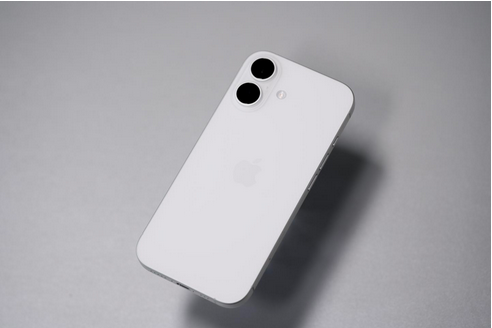
So how much difference will these subtle differences bring?
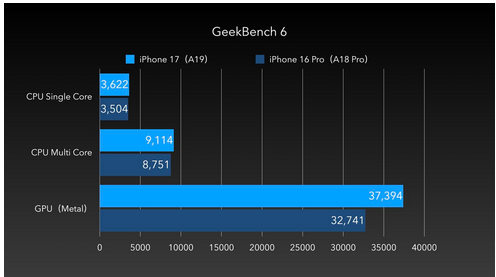
In the CPU test of GeekBench 6, the A19 chip of iPhone 17 performs better than the A18 Pro of iPhone 16 Pro in both single core and multi-core performance.
In the GeekBench AI testing of memory, the iPhone 16 Pro once again narrowly defeated the iPhone 17. In GPU testing, although the A19 chip of iPhone 17 is missing one core, its test score has significantly surpassed that of iPhone 16 Pro: in GeekBench 6 GPU testing, iPhone 17 has a score improvement of nearly 14% compared to iPhone 16 Pro;
If you still can’t see the difference here, let’s compare horizontally: until the end of the 19th cycle, the cycle score of iPhone 17 still exceeded that of iPhone 16 Pro in the 7th cycle. The iPhone 17 Pro Max underwent the same stress test – the “Full Blood A19 Pro” in the iPhone 17 Pro Max still scored higher than the second cycle of the iPhone 16 Pro after 20 cycles. It can only be said that this year’s A19 and A19 Pro chips are indeed “exceptionally talented” and cannot be compared to ordinary chips.
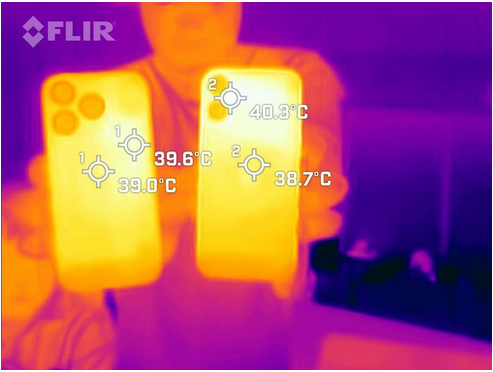
In terms of temperature, due to internal structural adjustments, the iPhone 17 and iPhone 16 Pro have completely different hotspot maps: the hotspot of iPhone 17 is closer to the top of the body, while the hotspot of iPhone 16 Pro is closer to the middle of the body. From the perspective of common grip areas, although the highest temperature of iPhone 17 is higher, it is relatively less hot to hold.
The imaging experience remains a watershed for the Pro series
After discussing so many areas where the iPhone 17 is leading, in the camera round, the iPhone 16 Pro finally has a chance to compete with the iPhone 17.
The iPhone 17 features a rear dual camera module with a 13mm 48MP ultra wide angle camera paired with a 26mm 48MP wide angle camera, which supports sensor stabilization; The iPhone 16 Pro features a rear triple camera module with a 13mm 48MP ultra wide angle camera, a 24mm 48MP wide angle camera, and a 120mm 12MP telephoto camera. The wide-angle camera uses second-generation sensor stabilization, while the telephoto camera uses 3D sensor stabilization.
Obviously, the independent 120mm telephoto lens brings an advantage to the iPhone 16 Pro that the iPhone 17 cannot catch up with. But even if we don’t look at the telephoto part and compare the main camera and wide-angle camera separately, there is still a gap between the two.
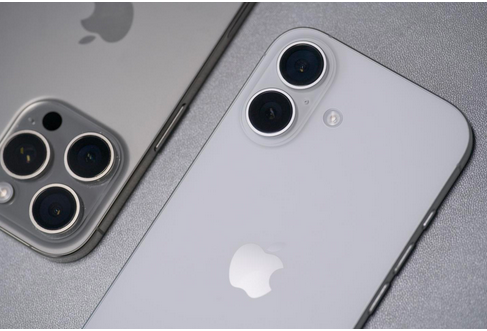
Before giving purchasing advice, let’s briefly review the advantages and disadvantages of iPhone 17 according to Lei Technology’s evaluation template.
Advantages:
- The A19 chip has superior performance and power consumption;
- 256GB storage space is available at no additional cost;
- Finally have a high refresh rate screen;
- Faster charging and longer battery life.
Disadvantages:
- The camera performance is relatively conservative;
- The USB interface only supports 2.0 speed.
So how should we choose between iPhone 17 and iPhone 16 Pro? After comparing the three stages just now, I believe everyone already has the answer in their minds: if you don’t have the need for professional mobile phone shooting, then the iPhone 17 with stronger performance and cheaper price will be a better choice.